















4.97 out of 5 based on 2,400+ reviews
Renovation insurance protects your property during building works, covering structural damage, theft, liability and the periods when the home sits unoccupied.
Rated 4.97 out of 5 from 2,400+ reviews


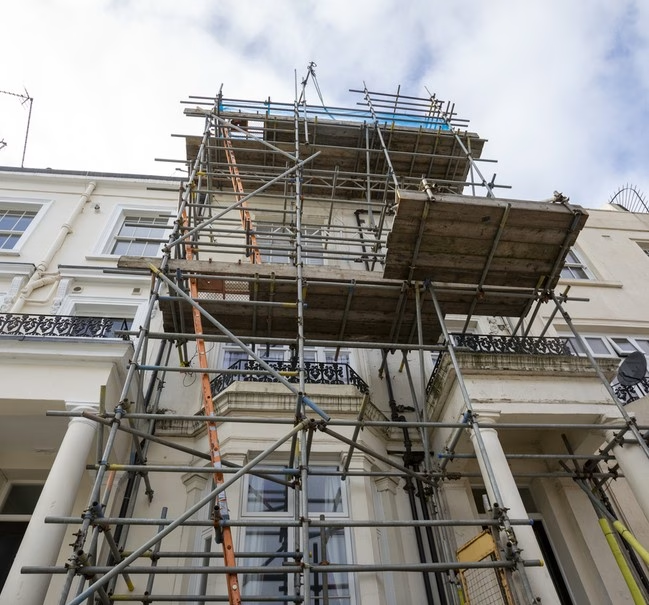
Renovation insurance provides essential cover for property owners during building works, extensions and refurbishments, protecting against structural damage, theft, third-party liability and the risks that arise when a property is unoccupied — exposures that standard home insurance policies are not designed to address. Homeowners, landlords and investors should seek specialist advice before works begin to ensure adequate protection is in place from the start of the project through to practical completion.
Renovation insurance is a specialist form of property cover designed to protect homeowners, investors and developers while building works are being carried out on a property.
Standard home insurance policies are not designed to accommodate the additional risks that come with a live renovation, and in many cases they will either exclude claims arising from building works or cease to be valid once major works begin. Renovation insurance bridges this gap, providing tailored protection from the commencement of the project through to practical completion.
Buy-to-let landlords overseeing a refurbishment between tenancies face a similar exposure, particularly where a property is left unoccupied for an extended period.

Covers accidental structural damage during works, including wall collapse, ceiling failure, subsidence and damage caused by or arising directly from renovation activity.
Renovation sites are vulnerable to opportunistic theft and vandalism. Cover protects tools, materials and fixtures on-site from loss or damage throughout the project.
If renovation works damage a neighbouring property or injure a third party, liability cover protects you against potentially significant legal and compensation costs.
Standard home insurance may lapse when a property is vacant during works. Specialist cover maintains protection throughout the renovation period.
The scope of a renovation insurance policy will vary depending on the nature and scale of the works, but most specialist policies are designed to address the most significant risks associated with active building projects.
Structural damage is a primary concern: if a wall collapses, a ceiling fails or subsidence occurs as a direct result of renovation activity, a specialist policy will typically respond where a standard buildings policy would not. Accidental damage to the fabric of the property — including damage caused by contractors on-site — is also commonly included.
Damage to neighbouring or adjacent properties is another critical area. If your renovation causes structural movement, water ingress or physical damage to a party wall or adjoining building, your renovation insurance policy can provide the liability protection needed to meet any resulting compensation claims.
This is particularly important for terraced or semi-detached properties where proximity to neighbouring structures increases the risk of collateral damage during excavation or structural works.
Renovation sites are also disproportionately exposed to theft and vandalism. Building materials, fixtures, fittings and contractor tools left on-site overnight are attractive targets, and a standard contents policy is unlikely to cover them.
Specialist renovation cover can extend protection to materials and equipment on-site, reducing the financial exposure that comes with a high-value active project.
In most cases, a standard home insurance policy will not provide adequate protection during a renovation.
Insurers generally view active building works as a material change to the risk profile of a property, and many policies include clauses that exclude or limit cover where structural works are underway. Some insurers require formal notification before works begin, and failure to do so can result in a claim being declined — even for a loss entirely unrelated to the renovation.
Where a property is left partially or entirely unoccupied during works — which is common during larger projects — additional restrictions typically apply.
Most home insurance policies include an unoccupancy clause that reduces cover after the property has been vacant for 30 or 60 consecutive days. Renovation insurance is specifically designed to accommodate these circumstances, maintaining full cover throughout the build period regardless of occupancy status.
Securing suitable renovation insurance requires an understanding of the specific works being undertaken, the reinstatement value of the property, the value of materials on-site, the expected duration of the project, and whether the property will be occupied throughout. Cover is generally arranged on a project basis, with policies aligned to the agreed start and end dates of the works and extendable where a project overruns.
At Private Finance, we work with a panel of specialist insurers and wholesale markets not available through standard comparison sites or high-street providers.
We can assess the specific requirements of your renovation project and source cover that accurately reflects the risk profile — whether that is a modest home extension, a full structural refurbishment, or a more complex project involving a listed building, a high-value property or multiple contractors. To discuss your requirements, speak to one of our advisers on 0800 652 0971.
Our clients value the confidence that comes from working with a broker who understands the full spectrum of high-net-worth financial, commercial, and protection needs.
A relaxed conversation to find out about you and what you need. We conduct a thorough fact-find to ensure we are best placed to understand your needs.
We complete full affordability and criteria checks on all client enquiries. This helps align your proposal with lender criteria and may improve the likelihood of a successful application.
Mortgage applications are complex and time-consuming, so our brokers will handle the whole process on your behalf, keeping you updated throughout.
Our service doesn’t end here. We'll be on hand to review the options available and help identify a suitable solution when your current deal expires.
Whatever your situation, our expert protection team can advise on suitable cover for your needs. We specialise in complex and bespoke insurance solutions to help you find a policy that matches your circumstances.
Residential Mortgages
Specialist Mortgages
Buy to Let Mortgages
Mortgages by Profession