















4.97 out of 5 based on 2,400+ reviews
Rated 4.97 out of 5 from 2,400+ reviews


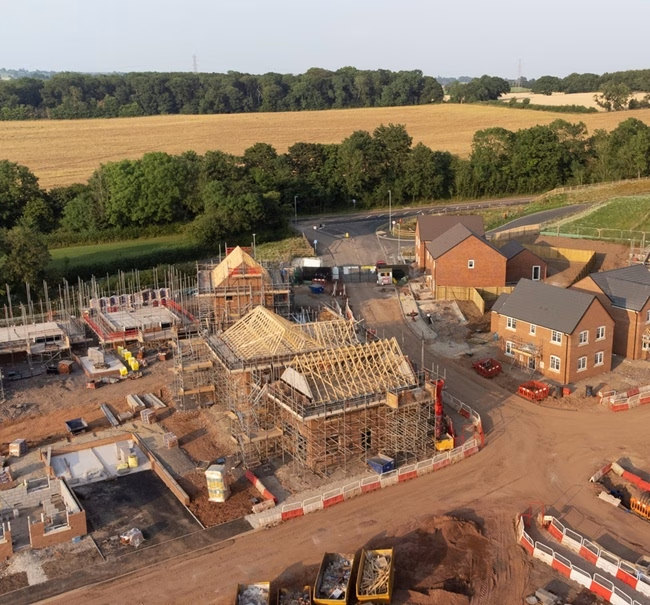
Development finance is a short-term funding solution for land purchases, new builds, refurbishments, and conversions, with funds usually released in stages as the project progresses. Lenders assess your experience, deposit, planning status, projected profit, and exit strategy, so using a specialist broker can help you secure the most competitive lender and terms for your project.
Property development represents one of the most profitable yet capital-intensive ventures in the real estate sector. Whether you’re an experienced developer embarking on a large-scale residential project or a first-time developer looking to refurbish a single property, securing the most appropriate development finance is crucial to turning your vision into reality.
Development finance is a short-term funding solution specifically designed to support property development projects from acquisition through to completion.
Unlike traditional mortgages that provide long-term residential lending, development finance offers flexible, project-specific funding that recognises the unique cash flow patterns and risk profiles of property development.
This type of finance typically covers the costs associated with purchasing land or property, construction or refurbishment expenses, professional fees including architects and surveyors, and other project-related costs such as planning applications and building regulations compliance.
Development finance bridges the gap between a developer’s available capital and the total cost required to complete a project.

Whether purchasing your own trading premises or acquiring a commercial property for rental income, we source competitive long-term funding tailored to your business profile.
For properties combining commercial and residential elements, we access specialist lenders experienced in the unique valuation and lending criteria these assets require.
Need fast access to capital for an auction purchase, refurbishment or cash flow gap? We arrange flexible short-term bridging solutions while longer-term finance is put in place.
Complex income, non-standard property or a unique business model? We match you with specialist and private lenders equipped to handle sophisticated commercial cases.
Development finance serves a diverse range of property professionals, each with different goals and project scales. Experienced property developers undertaking multiple projects simultaneously use development finance to maintain momentum across their portfolio without tying up all their capital in a single venture.
Property investors seeking to refurbish existing properties before selling or letting them find development finance ideal for funding renovation works that significantly increase property values.
The development finance market offers several distinct products, each designed for specific project types and developer needs. Land finance provides funding specifically for purchasing development sites, whether greenfield land requiring planning permission or brownfield sites ready for immediate development.
New build finance covers ground-up construction projects, from single dwelling developments to large housing estates. This finance accommodates the extended timelines and staged payment requirements associated with construction from foundation to completion, with lenders typically releasing funds in stages tied to specific construction milestones.
Conversion finance enables developers to change a property’s use, such as transforming offices into residential apartments or repurposing industrial buildings into live-work spaces. For developers working on multiple sites simultaneously, portfolio development finance provides facility-style funding that can be drawn against various projects, offering efficiency and often more competitive terms than securing separate loans for each development.
Flexibility in how funds are used and released makes development finance ideal for projects with evolving needs. Higher leverage allows developers to undertake larger projects than their available capital would otherwise permit, with borrowing up to seventy-five percent of costs multiplying effective buying power.
Every development finance loan requires a clear exit strategy explaining how the loan will be repaid. Open market sale represents the most common exit route, where completed properties are sold to owner-occupiers or investors.
Sale to investors as completed rental properties offers an alternative to individual sales, while part sale and part refinance combines strategies with some units sold to repay development finance while others are retained.
Your property may be repossessed if you do not keep up repayments on your mortgage.
The Financial Conduct Authority does not regulate some forms commercial mortgage
Our clients value the confidence that comes from working with a broker who understands the full spectrum of high-net-worth financial, commercial, and protection needs.
A relaxed conversation to find out about you and what you need. We conduct a thorough fact-find to ensure we are best placed to understand your needs.
We complete full affordability and criteria checks on all client enquiries. This helps align your proposal with lender criteria and may improve the likelihood of a successful application.
Mortgage applications are complex and time-consuming, so our brokers will handle the whole process on your behalf, keeping you updated throughout.
Our service doesn’t end here. We'll be on hand to review the options available and help identify a suitable solution when your current deal expires.
Residential Mortgages
Specialist Mortgages
Buy to Let Mortgages
Mortgages by Profession