











4.97 out of 5 based on 2,400+ reviews

Mortgages for Unusual Properties

Whether you’re buying, remortgaging or converting a non-standard property, specialist advice connects you with lenders who understand unusual homes.

Rated 4.97 out of 5 from 2,400+ reviews

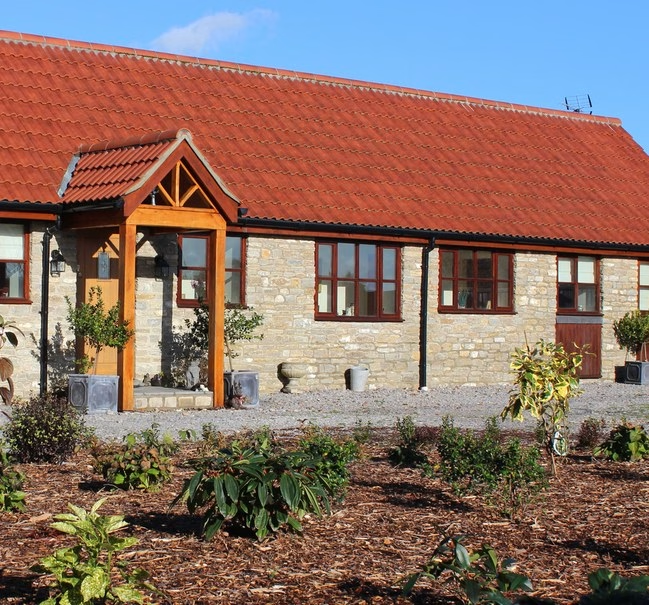
Converted stone barn with a terracotta tiled roof and timber porch, set behind a landscaped garden

Buying, Renovating, or Converting a Non-Standard Property

Whether you are looking to purchase, remortgage, or finance the conversion of an unusual property, securing the most suitable mortgage requires specialist knowledge that most High Street lenders simply do not have. Non-standard properties come in many forms — from converted barns and redundant churches to floating homes and former industrial warehouses — and each one presents its own set of valuation, legal, and insurance complexities that can cause mainstream lenders to decline outright.

The good news is that specialist brokers have established relationships with a network of lenders who actively embrace these property types, including regional building societies and private banks experienced in funding unique homes. Whether you already own an unusual property or are in the early stages of planning a purchase or conversion, the advice can make all the difference.

Unusual and non-standard properties commonly include:

Why Specialist Brokers Are Essential for Unusual Property Mortgages

Mainstream lenders are often quick to reject applications for unusual properties, not because the applicant is unsuitable, but because they lack the in-house expertise to assess non-standard structures or complex legal situations. A specialist mortgage broker bridges that gap, offering access to lenders who understand these properties and know how to price the risk appropriately.

At Private Finance, our brokers have deep experience with the full range of unusual property types. We understand the nuances of complex valuations, listed building restrictions, planning conditions, and staged release finance for renovation and conversion projects. We structure applications carefully, presenting the right evidence to the most suitable lenders, which significantly improves your chances of approval — even if you have already been turned down elsewhere.

As a recent example, we helped a client purchase a former HMO where individual rooms had their own locks and kitchenettes. A High Street lender had already declined the application. Through tailored supporting documentation and evidence, we secured prime residential finance on competitive terms.

Your home or property may be repossessed if you do not keep up repayments on your mortgage

Types of Unusual Properties and Key Mortgage Considerations

Barn Conversions

Barn conversions are among the most sought-after non-standard properties, prized for their character and space. However, lenders need assurance that the conversion meets full residential standards before they will lend.

Key considerations include whether full planning permission and building regulations approval are in place, the projected timeline to completion, and whether the estimated cost of conversion is proportionate to the expected market value of the finished property.

Staged release mortgages — where funds are disbursed in tranches as works progress — are a common and practical solution for barn conversion projects.

Churches, Chapels, and Historic Buildings

Financing a listed or historic building requires a lender with specific experience in this area. Specialist valuations are essential, as standard surveying approaches may not adequately capture the value or condition of a historic structure.

Lenders will also consider the restrictions that listed status places on renovation and alteration, the availability of appropriate buildings insurance, and whether the necessary planning and conservation consents are in place.

These properties are typically funded by regional lenders or specialist private banks rather than mainstream mortgage providers.

Industrial Conversions and Former Commercial Properties

Turning a former commercial building into a residential home is an increasingly popular route to creating a unique living space, but it requires a lender comfortable with commercial-to-residential conversion risk.
Lenders will want to see clear evidence of compliance with residential building codes, a well-defined plan and timeline for the conversion, and a credible exit strategy. Choosing a broker who has experience placing this type of finance is essential to avoiding unnecessary delays or rejections.

Houseboats and Floating Homes

Mortgages for houseboats and floating homes are a specialist area in their own right. Lenders assess the terms of any mooring lease, the insurability of the vessel, and whether the home meets basic standards of stability and habitability.
Not all lenders will consider floating homes at all, and the products available are quite different from standard residential mortgages. Specialist broker advice is not just helpful here — it is essential.

Former HMOs and Multi-Unit Properties

Properties that were previously licensed HMOs or configured as multiple self-contained units can present challenges when being returned to use as a single family dwelling. Lenders will want a clear explanation of the proposed conversion, confirmation that the relevant planning approvals are in place, and evidence that the finished property will be safe, habitable, and attractive to future buyers. Presenting a well-packaged application is key to securing finance on reasonable terms.

Self-Build and Renovation Finance for Unusual Properties

Many unusual property purchases require more than a standard mortgage. Where significant renovation or conversion work is needed, specialist lenders offer products designed specifically to release funds in stages as the project progresses, rather than as a single lump sum at the outset.

This includes self-build mortgages, renovation loans for barn conversions, loft conversions, and industrial projects, and bespoke finance structures for more complex cases. The most suitable product will depend on your personal circumstances, the nature of the property, and the specific criteria of the lender. An experienced broker will help you identify the most suitable option and manage the process from initial enquiry through to completion.

The Advantages of Working with a Specialist Broker

Choosing to work with a specialist mortgage broker when financing an unusual property gives you access to lenders and products that simply are not available on the High Street. Beyond access, the real value lies in the expertise a specialist brings to structuring your application — understanding how to present a complex property or situation in the most favourable light, and knowing which lenders are most likely to look on it favourably.
Whether you are dealing with planning complications, valuation challenges, or the need for staged release finance, a specialist broker will guide you through the process and work proactively to keep your application on track.

Your home or property may be repossessed if you do not keep up repayments on your mortgage

Frequently Asked Questions

A non-standard property is broadly any home that falls outside the criteria mainstream lenders use to assess standard residential mortgages. This includes converted buildings such as barns, churches, and warehouses, as well as listed or historic buildings, houseboats, flats above commercial premises, former HMOs, and unique residential projects like lighthouses or folly homes. The key issue is not whether a property is unusual in appearance, but whether a lender has the expertise and appetite to value and finance it appropriately.
Yes, it is possible to get a mortgage on a listed building, but you will need a lender with specific experience in this area. Listed status affects what changes can be made to the property, which influences valuation, insurance, and the lender’s assessment of future saleability. Specialist lenders — typically regional building societies or private banks — are far more comfortable financing listed buildings than mainstream lenders, and a specialist broker will know exactly where to place your application.
In most cases, yes. Standard surveying approaches are not always adequate for non-standard properties, particularly listed buildings, partial conversions, or properties with unusual construction materials. Lenders will typically instruct a surveyor with relevant experience, and in some cases you may be asked to obtain additional reports — for example, a structural survey or a specialist heritage assessment. Your broker can advise you on what to expect and help ensure the valuation process runs smoothly.
Rejection by a High Street lender does not mean finance is unavailable. Mainstream banks apply rigid criteria and often lack the expertise to assess unusual properties fairly. Specialist brokers have access to a much wider range of lenders, including private banks and regional building societies that actively finance non-standard homes. In many cases, a well-structured application with the right supporting evidence is all that is needed to secure approval elsewhere.
A staged release mortgage — sometimes called a self-build or renovation mortgage — is a product where funds are released in stages as work on the property progresses, rather than as a single lump sum at the outset. These are commonly used for barn conversions, industrial conversions, and other projects where significant building work is required before the property reaches its full value. Whether you need one depends on the nature and stage of your project, and a specialist broker will be able to advise on the most appropriate structure for your circumstances.
Yes, though the options are more limited than for conventional properties. Lenders who finance houseboats and floating homes will assess the terms of your mooring lease, the insurability of the vessel, and whether it meets habitable living standards. The products available are quite different from standard residential mortgages and not all lenders will consider them. This is an area where specialist broker advice is particularly important, as placing this type of application with the wrong lender wastes time and can damage your credit profile.
Not necessarily. While interest rates and fees can vary depending on the lender and the perceived complexity of the property, specialist lenders are often competitive — particularly for borrowers with strong financials and a well-presented application. The goal of a specialist broker is to secure the most favourable terms available for your circumstances, and in many cases clients are pleasantly surprised by what is achievable. The cost of not using a specialist, on the other hand, can be significant if an application is poorly placed or rejected.
Properties that are mid-conversion or mid-renovation are harder to finance because their current value is difficult to assess and they may not yet be habitable. Some specialist lenders will consider lending on a property in this condition, particularly where there is a clear and costed plan for completion and strong evidence that the finished property will be mortgage-worthy. Staged release finance is often the appropriate route in these situations. It is important to seek specialist advice early, before committing to a purchase, so that you understand your financing options in full.
In most cases, yes. Standard home insurance policies are not designed to cover non-standard construction, listed buildings, partial conversions, or floating homes. Lenders will require that you have adequate buildings insurance in place before they will complete on a mortgage, and for unusual properties this will typically mean sourcing a specialist policy. Your broker may be able to refer you to an appropriate insurance specialist, or at minimum will be able to advise you on what level of cover lenders will expect to see.
The best first step is to speak with a specialist broker as early in the process as possible — ideally before you make an offer on a property. Early advice will help you understand which lenders are likely to be suitable, what documentation and evidence you will need to prepare, and whether staged or specialist finance is required. At Private Finance, our brokers have extensive experience with the full range of unusual property types and can guide you through every stage of the process. Call us today on 0800 652 0971 or request a call back at a time that suits you.

Trusted by over 2,400 happy clients

Bespoke Mortgage Requirements?

Whatever your situation, our premier mortgage team can advise on suitable solutions. We specialise in complex and bespoke mortgage solutions to help you find competitive terms.

Comparing over 300 lenders
Free initial consultation with no obligation to proceed
25+ years of industry experience and relationships